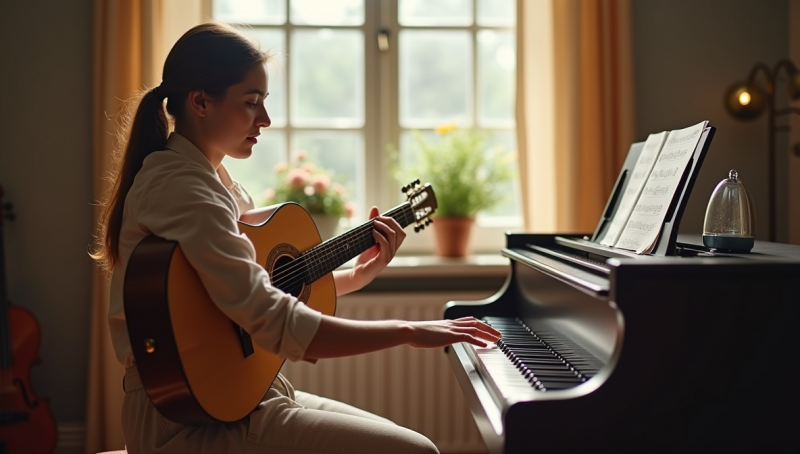
For many people, the idea of learning music comes wrapped in pressure. Practice schedules, progress charts, grades, and comparisons can quickly turn curiosity into obligation. Somewhere along the way, joy is replaced by judgement, and learning begins to feel like work.
Yet some of the most enduring musical journeys don’t begin with ambition at all. They begin with enjoyment. Slow, patient practice — guided by curiosity rather than outcomes — often leads to deeper understanding, stronger confidence, and a more lasting relationship with music.
Why Speed Isn’t the Goal
Modern culture rewards speed. Faster progress, quicker results, visible improvement. In music, this often shows up as rushing through exercises, jumping between techniques, or measuring success by how advanced something sounds rather than how well it’s understood.
But the brain doesn’t absorb complex skills at high speed. Learning music involves coordination, memory, listening, and emotional interpretation — all of which benefit from repetition and calm focus.
Slow practice allows space for mistakes without penalty. It encourages awareness rather than performance. Over time, this creates a stronger foundation than hurried progress ever could.
The Emotional Side of Learning Music
Music learning isn’t just technical; it’s emotional. Frustration, self-doubt, and comparison can quietly derail progress, especially for beginners or returning learners.
When practice is slow and self-directed, emotional resistance tends to soften. The learner stays engaged because the activity itself feels rewarding. This is crucial, because enjoyment keeps people returning even when progress feels subtle.
In that sense, learning for joy isn’t indulgent — it’s practical. It’s how people stay consistent long enough to actually develop musical skills in a meaningful, sustainable way.
Small Wins Build Confidence
Slow practice naturally creates small wins. Mastering a short phrase, improving tone on a single note, or understanding one rhythmic pattern may not feel dramatic, but each success reinforces confidence.
Confidence matters more than talent. A confident learner experiments. They listen more closely. They’re willing to repeat passages without boredom or shame. Over time, these behaviours compound into genuine progress.
This approach is especially helpful for adults who may feel they’ve “missed their chance” to learn music. Slow learning removes the race entirely.
The Brain Learns Best at a Comfortable Pace
Neuroscience supports what musicians have long observed: the brain forms stronger neural connections when learning happens at a manageable speed. Rushing overwhelms working memory; slowing down allows skills to embed.
Educational resources often emphasise this principle in early music learning. For example, the BBC’s Bitesize music resources explain core musical concepts in structured, accessible ways that reinforce gradual understanding rather than rapid advancement:
https://www.bbc.co.uk/bitesize
This kind of step-by-step learning mirrors how effective practice works in real life.
Letting Go of Comparison
One of the hidden benefits of slow practice is freedom from comparison. When the focus is on enjoyment and curiosity, external benchmarks lose their grip.
You’re no longer practising to keep up with someone else. You’re practising to explore sound, rhythm, and expression. That shift changes the entire experience of learning.
Music stops being something you’re judged by and becomes something you engage with — privately, honestly, and on your own terms.
Progress That Lasts
Ironically, slow practice often leads to faster long-term progress. Skills learned patiently tend to stick. Muscle memory becomes reliable. Understanding deepens rather than remaining superficial.
Learners who rush often revisit the same problems repeatedly because fundamentals were never fully absorbed. Slow learners may move cautiously, but they rarely need to unlearn bad habits later.
The result is progress that feels calm, earned, and sustainable.
Final Thoughts
Learning music doesn’t need to be a test of discipline or talent. It can be a quiet, enjoyable part of daily life — something that fits around existing routines rather than dominating them.
Slow practice invites curiosity. It reduces pressure. It keeps joy at the centre of learning, where it belongs.
And when learning is rooted in enjoyment rather than urgency, musical skills don’t just grow — they endure.
Add comment
Comments